You’re staring at your screen, frustration building with each passing minute. You’ve heard Flix IPTV is one of the best IPTV players available—clean interface, reliable streaming, easy playlist management. You’re running Linux, you’re ready to get started, and then… nothing. The information is scattered, contradictory, or simply assumes you’re using Windows or a Smart TV. You’re wondering if Flix IPTV even works on Linux, and if it does, why nobody can explain it clearly.
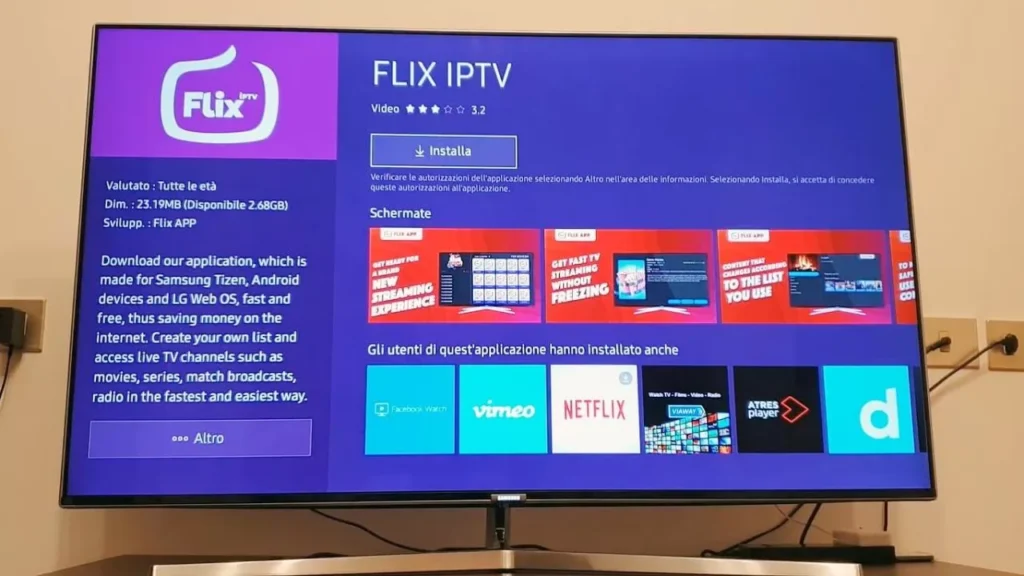
Your confusion is completely justified. Flix IPTV’s documentation focuses heavily on Samsung and LG Smart TVs, with desktop users seemingly an afterthought. The Linux community discussions are sparse, and what little exists assumes you already understand concepts like web apps, subscription models, and activation codes. But here’s what nobody’s telling you clearly: Flix IPTV on Linux is actually more straightforward than it appears—once someone explains your real options. Let’s cut through the confusion together and get you streaming.
Source of Overwhelm #1: Understanding What Flix IPTV Actually Is
Why it’s confusing: Unlike traditional applications you download and install, Flix IPTV operates primarily as a subscription-based web service. Most guides jump straight into activation codes and device pairing without explaining the fundamental model, leaving you confused about whether you’re installing software or subscribing to a service.
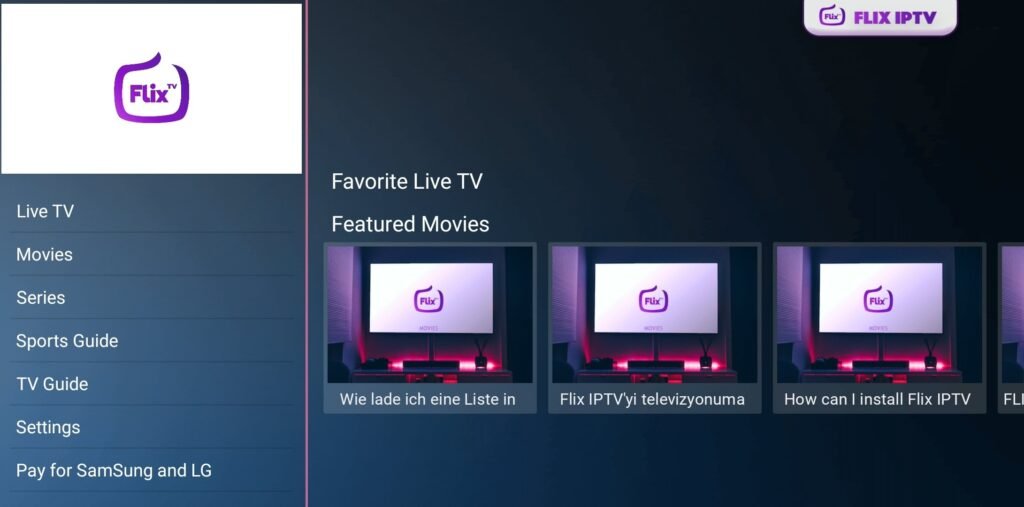
The clear solution: Let’s establish the basics first. Flix IPTV is a web-based IPTV player that you access through your browser. Think of it less like installing VLC Media Player and more like logging into Netflix. Here’s how it works:
- You subscribe to Flix IPTV (one-time payment or subscription)
- You receive an activation code
- You access the player through their web interface
- You add your IPTV playlist URL
- You stream directly in your browser
The key insight: You’re not installing a Linux application in the traditional sense. You’re accessing a web service that happens to work perfectly on Linux through any modern browser. This is actually good news—it means no compatibility issues, no dependencies, no complex installation procedures.
Your browser (Firefox, Chrome, Brave, whatever you prefer) is already installed on your Linux system. That browser is your Flix IPTV player. That’s it.
Source of Overwhelm #2: The Subscription and Activation Process
Why it’s confusing: The Flix IPTV website focuses on Smart TV setup, and their purchase flow isn’t clearly designed for desktop users. You’re not sure which plan to buy, how activation works on Linux, or whether you need special software to generate or enter activation codes.
The clear solution: The subscription process is identical regardless of your platform. Here’s your step-by-step path:
Step 1: Visit the Flix IPTV website Go to https://flixiptv.com in your browser.
Step 2: Choose your subscription Click “Get Flix IPTV” or “Subscribe.” You’ll typically see options like:
- Single device license
- Multiple device license
- Annual or lifetime options
Choose based on how many devices you’ll use. For just your Linux desktop, single device is fine.
Step 3: Complete the payment Follow the checkout process. You’ll receive an email with your activation code—a string of letters and numbers like “ABCD-1234-EFGH-5678.”
Step 4: Activate on your Linux device Open your browser and go to https://flixiptv.com/activate
Enter your activation code and select “Browser/Web” as your device type (some versions say “Other” or “PC”). Click Activate.
Step 5: Access the web player After activation, you’ll be directed to the Flix IPTV web player. Bookmark this page (Ctrl+D) for easy access.
Important note: Your activation is tied to your device/browser combination. If you clear your browser data or switch browsers, you may need to reactivate, so keep that activation code saved somewhere safe.
Source of Overwhelm #3: Adding Your IPTV Playlist
Why it’s confusing: You’ve successfully subscribed and activated Flix IPTV, but now you’re staring at an empty player. Guides assume you know what an M3U URL is, where to get one, and how to add it to Flix IPTV. The interface shows options for “Add Playlist” but doesn’t explain the format or requirements.
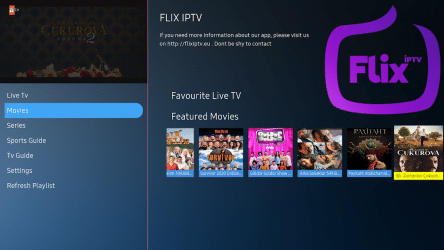
The clear solution: Let’s demystify IPTV playlists. An M3U file is simply a list of streaming channels provided by your IPTV service (separate from Flix IPTV—they’re just the player, not the content provider). Here’s how to add your playlist:
Step 1: Get your M3U URL from your IPTV provider This is a URL from your IPTV subscription service (not Flix IPTV). It looks like: http://example.com:8080/get.php?username=yourname&password=yourpass&type=m3u_plus
Your IPTV provider should have emailed this to you or have it in their customer dashboard.
Step 2: Add the playlist to Flix IPTV In the Flix IPTV web player:
- Click the “+” or “Add Playlist” button (usually in the top corner)
- Select “Add URL” or “M3U URL”
- Paste your IPTV provider’s M3U URL
- Give it a name (like “My IPTV Service”)
- Click “Add” or “Save”
Step 3: Wait for the playlist to load Flix IPTV will process your playlist. This can take 30 seconds to a few minutes depending on how many channels your provider includes. Be patient.
Step 4: Start watching Your channels will appear organized by category. Click any channel to start streaming.
Troubleshooting: If your playlist won’t load, check:
- Is the URL correct? (One wrong character breaks it)
- Is your IPTV subscription active? (Contact your provider)
- Are you connected to the internet? (Obvious, but worth checking)
Source of Overwhelm #4: Browser Compatibility and Performance
Why it’s confusing: You’ve got everything set up, but playback is choppy, the interface is laggy, or certain features don’t work. You’re not sure if it’s your browser choice, your Linux distribution, your internet connection, or something wrong with Flix IPTV itself.
The clear solution: Browser choice matters for web-based players. Here’s how to optimize:
Best browsers for Flix IPTV on Linux (in order):
- Chrome/Chromium – Best performance and compatibility
- Firefox – Excellent alternative, slightly better privacy
- Brave – Good if you’re privacy-focused
- Edge – Works well if you have it installed
For optimal performance, enable hardware acceleration:
In Firefox:
- Type
about:preferencesin the address bar - Scroll to Performance
- Uncheck “Use recommended performance settings”
- Check “Use hardware acceleration when available”
- Restart Firefox
In Chrome/Chromium:
- Go to Settings → System
- Enable “Use hardware acceleration when available”
- Restart Chrome
Check your graphics drivers: Outdated drivers cause playback issues. Update them:
sudo ubuntu-drivers autoinstallReboot after updating drivers.
Internet speed requirements: Run a speed test:
speedtest-cli(Install with sudo apt install speedtest-cli if needed)
You need:
- 5 Mbps minimum for SD streaming
- 10 Mbps minimum for HD streaming
- 25 Mbps minimum for 4K streaming
If your speeds are lower, streaming issues aren’t Flix IPTV’s fault or Linux’s fault—it’s your connection.
Source of Overwhelm #5: Managing Multiple Devices and Playlists
Why it’s confusing: Maybe you want to use Flix IPTV on both your Linux desktop and another device, or you have multiple IPTV providers and want to manage different playlists. The documentation doesn’t clearly explain how device limits work or how to organize multiple playlists efficiently.
The clear solution: Let’s address both scenarios:
Managing multiple devices:
- Single device licenses work on ONE device at a time
- If you activated on Linux, you can’t simultaneously use it on your phone
- To switch devices, deactivate from the current device (Settings → Deactivate) then activate on the new device
- Multi-device licenses let you use Flix IPTV on several devices simultaneously (worth it if you need this flexibility)
Managing multiple playlists: Flix IPTV supports multiple playlists beautifully:
- Click “Add Playlist” as many times as needed
- Each playlist appears as a separate section
- Switch between playlists using the sidebar menu
- You can organize different IPTV providers, free channels, and premium services separately
Creating a Linux desktop shortcut: For quick access without opening your browser and typing the URL:
- Create a new file called
flix-iptv.desktopon your desktop - Right-click the file and open with a text editor
- Paste this content (adjust the browser path if needed):
[Desktop Entry]
Version=1.0
Type=Application
Name=Flix IPTV
Exec=firefox https://flixiptv.com/app
Icon=video-player
Terminal=false- Save and close
- Right-click the file → Properties → Permissions → Check “Allow executing file as program”
Now you have a clickable desktop icon that launches Flix IPTV directly.
Your Path Forward
Here’s the truth that should bring you relief: Flix IPTV on Linux isn’t complicated because Linux is difficult—it’s unclear because the documentation was written with Smart TVs in mind. Once you understand that you’re simply accessing a web service through your browser, everything clicks into place.
You don’t need special Linux knowledge. You don’t need to compile anything from source. You don’t need Wine, emulators, or compatibility layers. You need a browser (which you already have), a subscription (which you now know how to get), and your IPTV provider’s M3U URL (which they provided when you signed up with them).
The overwhelm you felt was entirely about unclear information, not about your abilities or Linux’s limitations. Web-based applications are actually one of Linux’s strengths—they work identically across all platforms without compatibility headaches.
Right now, open your browser. Visit flixiptv.com. Get your subscription. Activate your code. Add your playlist. In ten minutes, you’ll be streaming your IPTV content with a clean, professional interface, wondering why you worried about this at all.
You’ve navigated through the confusion. You understand the model. You know the steps. The path forward is clear and simple.
Sometimes the best solution is the one that was there all along—your browser, ready and waiting. Embrace the simplicity. You’ve got this. Start streaming.